Best Solar Generators for Narrowboats and Motorhomes UK 2025
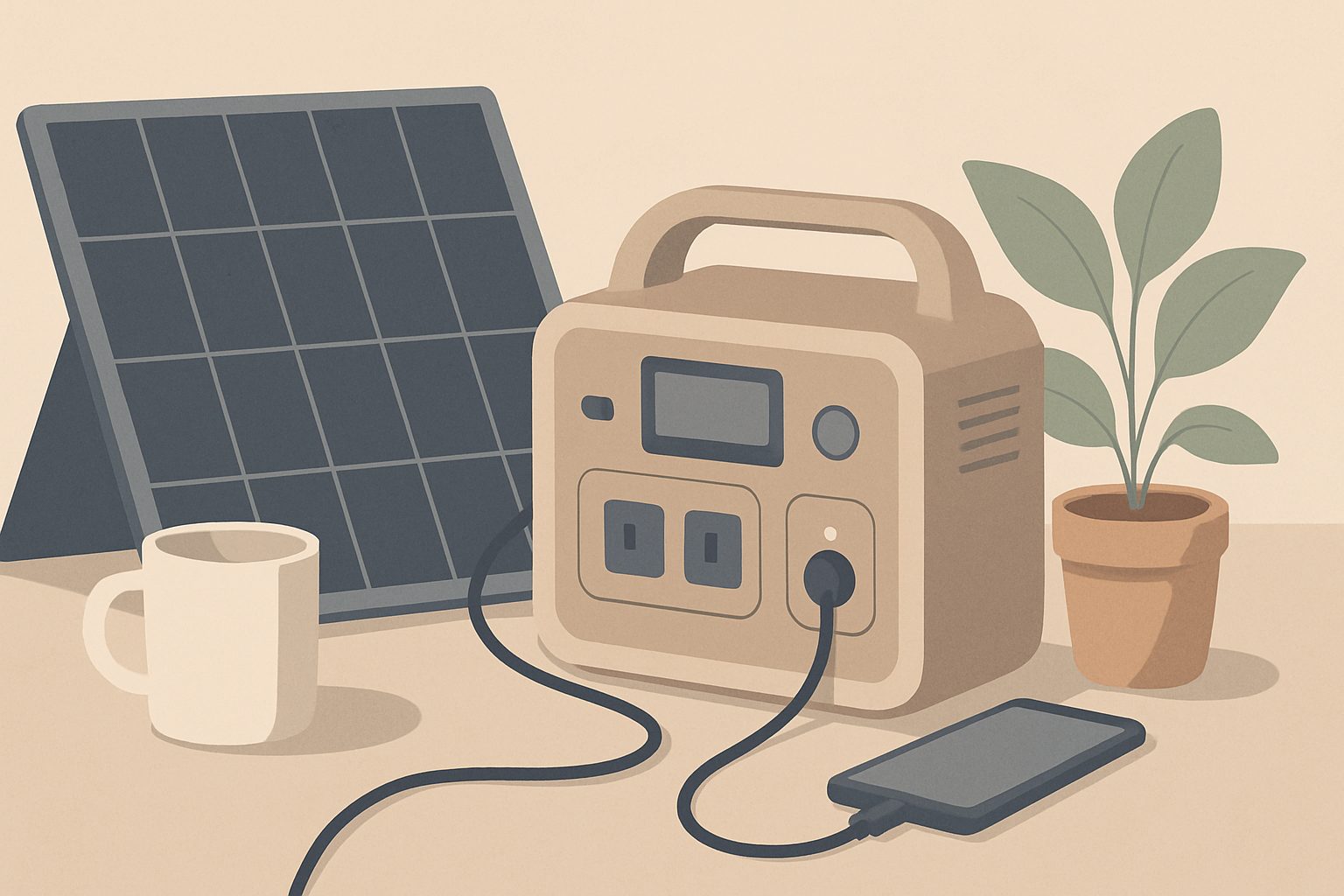
Living on a narrowboat or motorhome means dealing with unreliable shore power and a constant tension between comfort and energy budget. Traditional leisure batteries charge slowly from an engine or mains hookup, and winter onboard becomes a game of rationing. A solar generator—a self-contained battery pack paired with panels—changes this: you get silent, engine-off charging that actually works under British skies.
Not all solar generators suit mobile living, though. Weight matters when you've got a fixed payload budget. Vibration from engine and road demands robust internal components. Your 12V system needs proper interfacing. Panel flexibility beats rigid frames in tight spaces. And you're chasing genuine reliability, not Instagram aesthetics.
The three models below have proven themselves in the UK leisure market precisely because they address these constraints.
What Matters for Narrowboat and Motorhome Solar
Weight and physical footprint. A narrowboat's cabin roof has strict weight limits. A motorhome's shelf space is precious. Compact footprint means you can split panels across roof and front window, spreading weight and maximising sun exposure as you move.
12V DC compatibility. Most leisure boats and vans run 12V systems: fridge, heater, lights, water pump. A solar generator that charges your 12V battery bank directly—via Anderson or leisure battery connectors—is vastly more useful than one that only talks USB-C. You avoid DC-to-AC-to-DC conversion losses and keep things simple.
Vibration tolerance. Engine vibration and road movement stress internal capacitors and solder joints. Cheap units fail within months. Better units use thicker, shorter internal connections and potted electronics.
Real winter output. UK solar panels produce 30–50% of summer output in December. It's not worthless—it keeps your battery topped up on cloudy days—but you must accept it. Generators claiming "works great in winter" usually mean "works acceptably in autumn and spring."
Expandability. You might start with one 100W panel but later add another. Your solar generator should accept multiple panels via parallel connectors, not lock you into a single rigid setup.
EcoFlow River 2 Pro
Capacity: 768Wh | Weight: 7.6kg | Peak output: 1600W
The River 2 Pro dominates UK motorhome forums for good reason: it's light, has proper 12V DC output (Anderson connector), and EcoFlow's software is genuinely clever.
Pairing it with two 100W panels (total around 200W in decent sun, 60–80W in winter) gives you realistic all-season charging. On a motorhome parked five days in Cornwall, you'll comfortably cover a small 12V fridge, phone charging, and occasional kettle use.
The weakness is the 768Wh capacity. It's a buffer, not a backup system. Run your heater or shower pump and you'll drain it in 2–3 hours. But on a narrowboat or motorhome, you're not trying to power a house—you're topping up your leisure battery, which does the heavy lifting.
Build quality is solid. The casing feels robust. Panel connectors are weatherproof. The 12V Anderson output stays reliable; several owners report three years of daily use with no degradation.
A minor annoyance: the internal fan runs intermittently, which some find intrusive in a small cabin. It's not loud, but it's noticeable at night.
Jackery 1000 Plus
Capacity: 1024Wh | Weight: 11.2kg | Peak output: 2000W
The Jackery appeals if you want more onboard capacity without going massive. 1024Wh buys you genuine overnight reserve: run a small heater or hair straightener without draining your leisure battery.
The trade-off is weight. At 11.2kg, it's pushing the comfort zone for permanent roof mounting on a narrowboat. Motorhome owners typically stash it inside and mount just the panels topside.
Jackery's 12V output is less direct than EcoFlow's: you get a 12V trigger output, but it requires a separate lead. It works, but it's an extra component to manage. The standard USB and AC outputs are excellent if you want to charge devices or run small kitchen appliances.
The panels are genuinely good—durable and flexible enough to mount curved on a motorhome roof. Jackery's newer models clip directly to the unit, which is convenient.
Real-world winter output: similar to the EcoFlow, around 60–80W in December. Summer output with two 200W panels can push 300W+ in good sun.
Build feels premium. Casing is robust, and Jackery's warranty support is responsive if anything fails.
Anker SOLIX C800
Capacity: 768Wh | Weight: 8kg | Peak output: 1600W
Anker's SOLIX sits between EcoFlow and Jackery: lighter than the Jackery, with slightly better 12V integration than earlier Anker models.
The 768Wh is identical to the River 2 Pro, so capacity limitations apply—it's a buffer, not a primary battery. But the build is very robust. Anker's reputation for longevity is earned; these units genuinely last.
12V output is clean and well-labelled. The unit integrates well with leisure battery systems. Anker's interface is simpler than EcoFlow's, which some prefer: fewer menu layers, less temptation to fiddle.
One advantage: Anker's panels are cheaper to replace or expand, so if you want to scale up, you're not locked into premium pricing.
The main drawback is less software sophistication. EcoFlow's app gives you granular control and monitoring; Anker's is functional but basic.
For narrowboat owners prioritising simplicity and reliability over feature richness, this is the pick.
In Practice
Start with one solar generator and two 100W panels. Total cost sits around £1400–£2000 depending on brand. In summer, you'll keep your leisure battery topped up without running the engine. In winter, you'll get 60–80W average output, which means your battery drops less quickly and you run the engine less often.
After six months, you'll know whether to expand—add a second panel, or upgrade to a larger capacity if you're running high-demand appliances.
The best solar generator is the one you'll actually install and maintain. All three above won't let you down.
More options
- EcoFlow DELTA Pro Portable Power Station (Amazon UK)
- Jackery Explorer 2000 Plus Solar Generator (Amazon UK)
- Bluetti AC200P Portable Power Station (Amazon UK)
- EcoFlow 220W Bifacial Solar Panel (Amazon UK)
- Jackery SolarSaga 200W Solar Panel (Amazon UK)