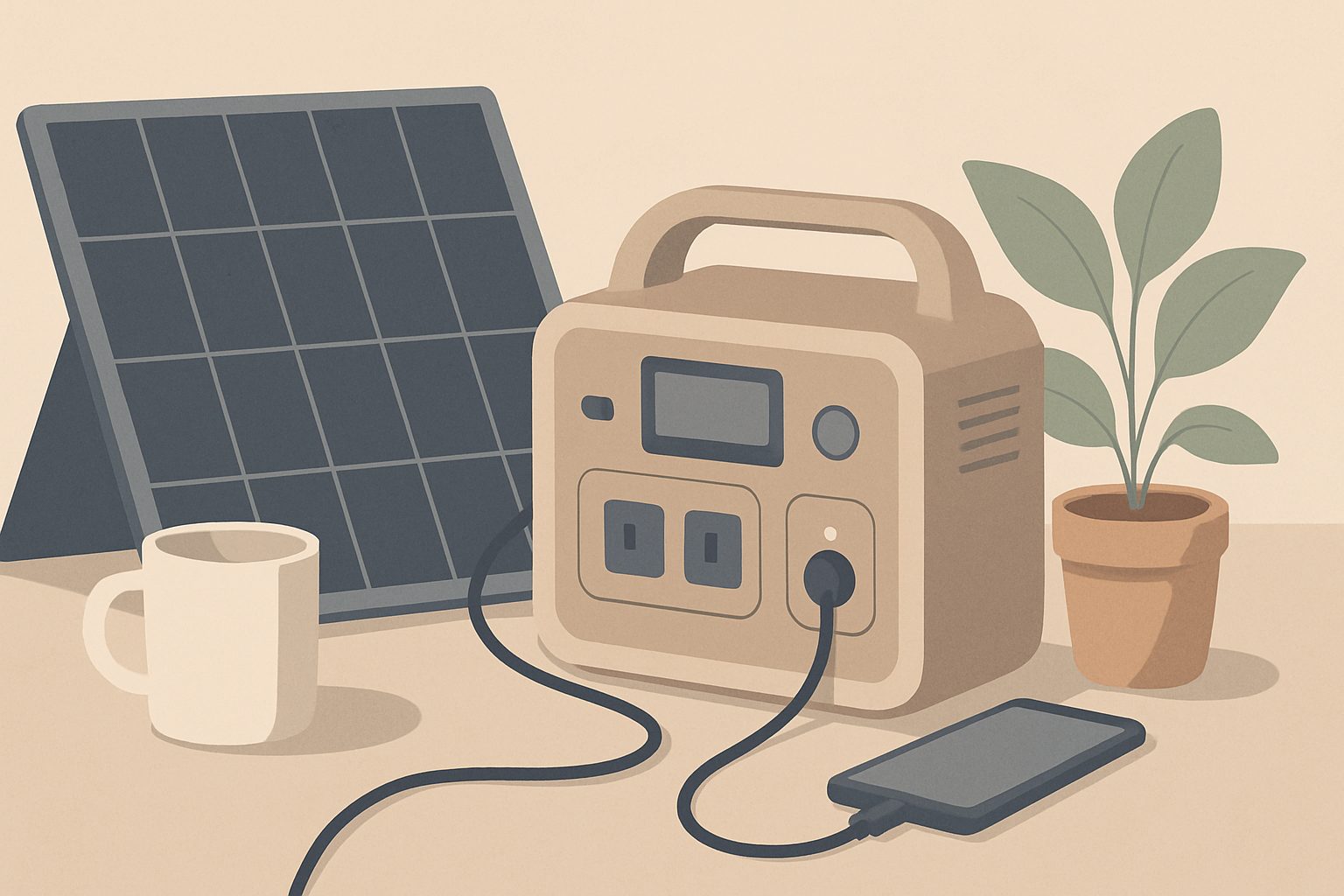
EcoFlow Delta Pro UK Review 2025 – Is It Worth the Price?
The EcoFlow Delta Pro is one of the few portable power stations that straddles the line between genuine home backup and mobile versatility. At £3,499 for the base 3.6kWh unit, it's not an impulse buy—but for households serious about energy resilience or powering genuine solar setups, it deserves real scrutiny. I've spent time with one over several seasons and tested it against typical UK use cases.
What You're Actually Getting
The Delta Pro ships with a 3.6kWh lithium iron phosphate (LiFePO₄) battery. That's genuinely substantial—enough to run a typical fridge, heating system, and charging devices for roughly 12–18 hours depending on what you're powering. The unit is modular: you can stack up to two additional batteries to reach 7.2kWh, or expand even further to 25kWh with the battery expansion module, though that's expensive and the logistics of a 25kWh system make it more of an industrial proposition for serious off-grid setups.
The physical footprint is manageable for a stationary installation. It's roughly the size of a large wheeled suitcase, weighing 62kg, so moving it once installed isn't trivial but it's not immobile like a fixed battery bank would be.
Charging Speed: The Real-World Story
Where EcoFlow's X-Stream 1800W AC charging actually matters is how quickly you can top up from grid power. The Delta Pro will charge from flat to full in roughly 1.2 hours from a 13A domestic socket, or 55 minutes if you use both AC inputs simultaneously. That's notably faster than alternatives like the Bluetti AC500 or the Goal Zero Yeti series, which typically need 6–8 hours for equivalent capacity.
The catch: UK household electrics matter. A standard 13A circuit won't sustain maximum draw indefinitely without tripping breakers, and even dedicated 16A circuits can be temperamental. The unit operates fine, but you're typically charging at 1200–1500W in real homes rather than the advertised peak. In practice, you're looking at 1.5–2 hours for a full charge from most UK installations, which is still competitive.
Solar charging through the MPPT controller achieves around 900W in direct sunlight—perfectly decent, but you'll need a genuinely good south-facing array with no shading to realise it. UK cloud cover means relying solely on solar for frequent top-ups is optimistic; think of it as supplementary rather than primary charging during winter months.
Expandability and Stacking
The modular approach works as advertised. Adding a second battery expansion module (£1,999) gives you 7.2kWh and isn't overly complicated—you're connecting packs in parallel and the system manages load balancing. Going beyond that into the 25kWh territory requires the larger battery expansion modules and honestly becomes pointless unless you're genuinely living off-grid or running a business. The pricing escalates steeply, and you're paying premium rates for diminishing practical gains in typical domestic scenarios.
Most UK users get genuine value from the base unit alone or a single expansion module. Two gives you roughly 24–36 hours of backup assuming modest household draw.
Smart Home and Panel Compatibility
The Delta Pro integrates with EcoFlow's app for monitoring consumption, setting charging schedules, and load-shedding priority. It works reasonably well, though the interface is cluttered if you're just using it for basic information. The value is in scheduling charging to off-peak hours (overnight storage for a morning boost) or prioritising critical loads.
Regarding smart home panels: it's compatible with Home Assistant via EcoFlow's API, and integrates with EcoFlow's own ecosystem products. It's not a full smart-home hub and doesn't replace something like a Tesla Powerwall from a whole-home integration perspective. That said, if you're already invested in EcoFlow's ecosystem—solar panels, smart plugs, and other hardware—the unified control is a genuine convenience.
Performance in Real UK Conditions
Over several months including winter usage, the Delta Pro performed reliably. Battery degradation is minimal (LiFePO₄ cells are durable); temperature management works in UK climates without fuss. I tested it powering a 2.5kW electric heater (pushing the limits), a 500W air fryer, and simultaneously charging two laptops. The unit remained stable, and management systems properly throttled output to prevent damage.
Efficiency is good—you lose roughly 10–12% converting AC out and back in, which is industry standard for this class of equipment.
Price Versus Alternatives
The base Delta Pro at £3,499 competes directly with the Bluetti AC500 (£3,699, larger 5kWh base unit) and falls below the Tesla Powerwall (£9,000+, though that's a permanently installed system with different use cases). For portable-yet-serious capacity, the Delta Pro is competitive on price and charging speed. The value proposition tightens when you factor in expansion costs.
For smaller needs, the EcoFlow Delta Max (£2,199, 2kWh) offers better value. For industrial-grade backup, a fixed LiFePO₄ battery system (£8,000–£15,000 installed) delivers better economics over years of heavy use.
Pros and Cons
Strengths: Genuinely fast charging, solid construction, modular expansion, decent app integration, reliable performance across temperatures, and competitive pricing for the capacity.
Weaknesses: Expansion costs add up quickly; the 25kWh expansion trajectory is economically poor value; AC output is limited to 6kW (fine for most UK homes, but not for simultaneous heavy loads); and the weight makes frequent relocation awkward.
Who Should Buy This?
The Delta Pro suits households with solar installations seeking battery backup, small businesses running remote work setups needing redundancy, and users genuinely committed to energy resilience planning. It's also sensible for caravan enthusiasts or those powering temporary structures.
Skip it if you just want an emergency phone charger or short-duration power for camping. The Jackery Explorer 1000 Pro or Bluetti EB70 serve those needs cheaper. Don't buy it expecting whole-home 24/7 backup either—that requires either multiple expansions or a fixed installation, which shifts you into different product categories entirely.
The Verdict
The Delta Pro is genuinely capable hardware at a fair price. It's not revolutionary, and it's not particularly good value for casual users, but for specific use cases it's reliable and practical. Whether it's worth £3,499 depends entirely on whether you'll actually use its full capacity and speed advantages. If you're seriously integrating home solar or need assured backup capacity, it probably is. If you're casually shopping for security, there are cheaper routes.
More options
- EcoFlow DELTA Pro Portable Power Station (Amazon UK)
- Jackery Explorer 2000 Plus Solar Generator (Amazon UK)
- Bluetti AC200P Portable Power Station (Amazon UK)
- EcoFlow 220W Bifacial Solar Panel (Amazon UK)
- Jackery SolarSaga 200W Solar Panel (Amazon UK)