Best Solar Generators for Home Backup Power UK 2025
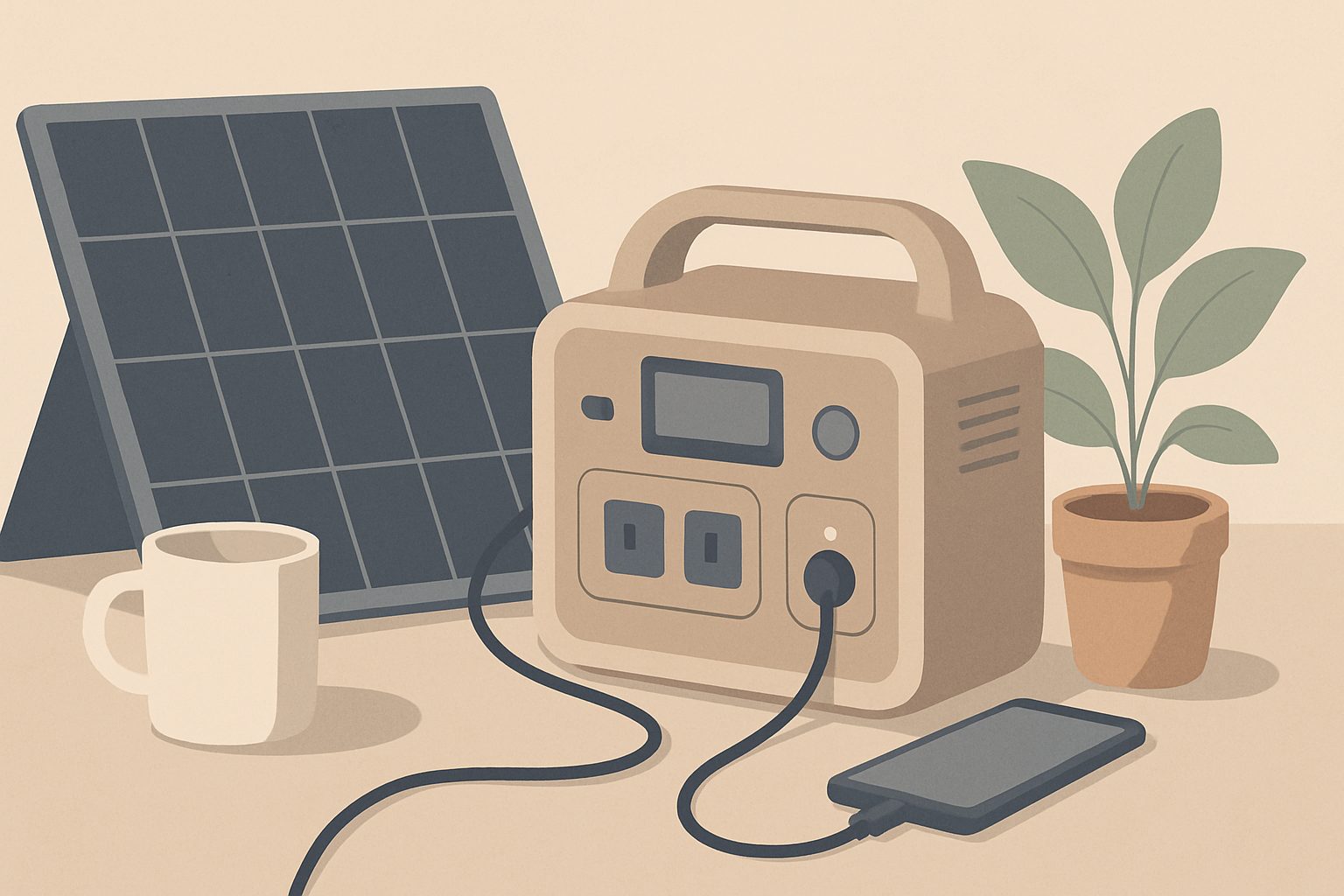
Power cuts in the UK have become more frequent, whether from grid strain, weather events, or maintenance work. A solar generator — essentially a portable power station paired with solar panels — provides a practical way to keep essential devices running without relying on a noisy petrol generator.
Unlike traditional backup solutions, solar generators charge silently from sunlight, work indoors safely, and can be ready for use immediately when the power goes down. This guide compares the four most reliable options available on Amazon UK, focusing on capacity, charging speed, and real-world practicality for homes.
What to Consider When Choosing a Solar Generator
Capacity matters most. Measured in watt-hours (Wh), this determines how long you can run appliances. A 1,000 Wh unit will power a laptop, lights, and phone chargers for a full day. For heating, refrigeration, or multiple devices, you'll want 2,000+ Wh.
Solar input speed is often overlooked but crucial. A generator with 400W solar input will charge from sun much faster than one accepting only 100W, especially important during UK winters with shorter days.
AC outlet count and quality matter if you're running multiple appliances simultaneously. Look for pure sine wave inverters, which prevent damage to sensitive electronics.
Charging options are worth comparing: wall charging for speed, solar for resilience, and car charging for flexibility.
EcoFlow Delta 2: Best Overall Capacity and Speed
The EcoFlow Delta 2 leads with 1,024 Wh capacity, genuinely useful for homes running fridge, heating, and multiple devices for 12+ hours. It accepts 400W solar input, meaning a 400W panel charges it fully in about 5–6 hours of decent sunlight.
It has six AC outlets, two USB-C ports (one 100W), and a 15A hardwired circuit for direct appliance connection. Wall charging reaches 100% in 80 minutes, the fastest of any option here. The app lets you monitor output and battery status remotely.
Downsides: it's heavy at 15 kg and pricier than some alternatives. The larger footprint makes it less portable for frequent moving, though it's still manageable for getting from shed to kitchen.
Amazon UK price: typically £800–950.
Jackery Explorer Pro 1000: Rugged and Reliable
Jackery's Pro 1000 offers 1,002 Wh with a 200W solar input rate (lower than EcoFlow), meaning 8–10 hours to full charge from solar alone. It has five AC outlets, three USB-A ports, and one USB-C.
This unit feels genuinely robust—the casing is industrial plastic, and it's designed to take knocks. Wall charging is slower than EcoFlow (around 7 hours), but that's offset by excellent real-world durability; these units stay reliable across multiple seasons of use.
The interface is straightforward: physical buttons, no app required. Some people prefer this simplicity; others miss the monitoring convenience.
Downsides: slower solar charging means longer waiting during dull weather. At 10.6 kg, it's lighter than the Delta 2 but still substantial.
Amazon UK price: usually £650–800.
Bluetti AC500: Maximum Capacity for Large Homes
If you need serious backup—running a home office, electric heating, or multiple appliances—the AC500's 5,120 Wh capacity is unmatched in this comparison. It can keep a typical home running for days, not hours.
It accepts a massive 1,200W solar input, charges from wall in 3–4 hours, and has eight AC outlets plus extensive USB. The modular design lets you expand capacity by adding extra battery packs.
Downsides: it's expensive (£3,500+), heavy (56 kg), and genuinely needs a permanent location—not a portable solution. This is backup infrastructure, not portable equipment.
Only viable if: you want whole-home backup, can justify the cost, and have dedicated space.
Amazon UK price: £3,200–3,800.
Anker SOLIX C1000: Budget and Compact
The SOLIX C1000 delivers 1,024 Wh in a more compact form than EcoFlow, weighing just 11.5 kg. It accepts 400W solar input and charges to full from wall in around 2 hours—genuinely fast.
You get four AC outlets and multiple USB ports. Performance is reliable; it's a solid mid-market option that doesn't compromise on essentials.
Downsides: the charging interface is fiddlier than competitors, and online reviews suggest occasional software updates can be disruptive. Customer support is less established than EcoFlow or Jackery in the UK.
Amazon UK price: typically £700–850.
Quick Comparison
| Model | Capacity | Solar Input | AC Outlets | Weight | Price | |-------|----------|-------------|-----------|--------|-------| | EcoFlow Delta 2 | 1,024 Wh | 400W | 6 | 15 kg | £800–950 | | Jackery Pro 1000 | 1,002 Wh | 200W | 5 | 10.6 kg | £650–800 | | SOLIX C1000 | 1,024 Wh | 400W | 4 | 11.5 kg | £700–850 | | Bluetti AC500 | 5,120 Wh | 1,200W | 8 | 56 kg | £3,200–3,800 |
Which Should You Buy?
For most UK homes: the EcoFlow Delta 2 offers the best balance of capacity, speed, and practicality. Fast solar charging matters during UK winters.
If budget is tight: the Jackery Explorer Pro 1000 is solid value and genuinely durable.
For true portability: the Anker SOLIX C1000 is lightweight and quick-charging, though software reliability is worth monitoring.
For serious backup: the Bluetti AC500 is the only real option, but the cost and size commitment need careful consideration.
Most people should budget £700–900 and add a 200–400W solar panel (another £150–300) to make the system genuinely independent. Test your chosen unit before a power cut by running essential devices from it—you'll quickly learn what works and what drains the battery faster than expected.
More options
- EcoFlow DELTA Pro Portable Power Station (Amazon UK)
- Jackery Explorer 2000 Plus Solar Generator (Amazon UK)
- Bluetti AC200P Portable Power Station (Amazon UK)
- EcoFlow 220W Bifacial Solar Panel (Amazon UK)
- Jackery SolarSaga 200W Solar Panel (Amazon UK)