Best Solar Generators for Camping and Caravanning UK 2025
Camping and caravanning trips across the UK often mean limited access to mains power. A portable solar generator keeps your essential devices charged without relying on hook-up sites or noisy fuel generators that annoy fellow campers. The key is finding one light enough to pack, robust enough to handle British weather, and capable enough to charge phones, tablets, and camping lights over several days of use.
What makes a good camping solar generator
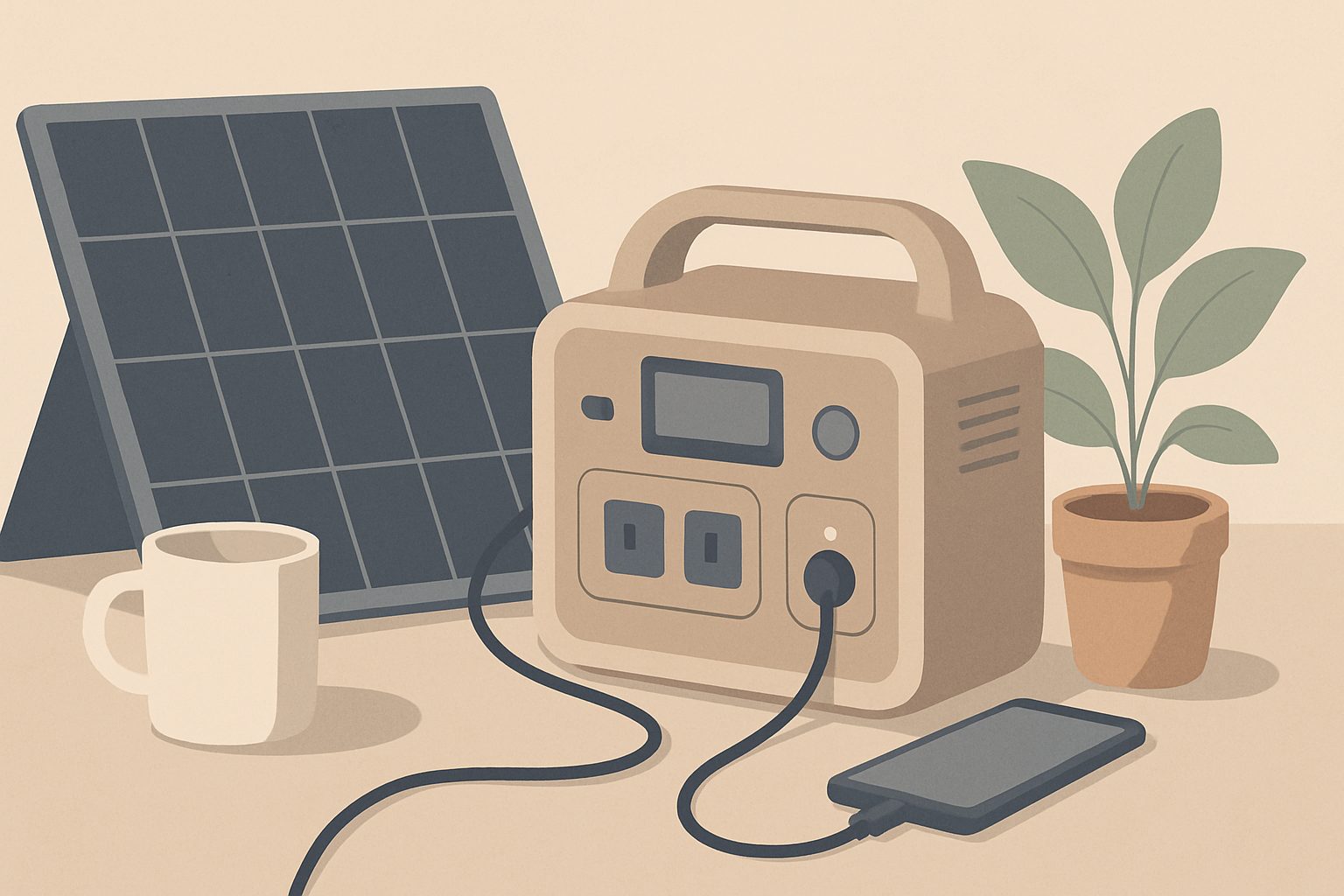
Unlike portable power banks, a solar generator comprises two parts: a battery unit and foldable solar panels. The battery stores energy from the sun, while panels convert daylight into electricity. For camping, you want a system that's genuinely portable—anything over 10kg becomes tedious to carry from car to tent, especially across uneven ground.
The best camping solar generators balance capacity with weight. A 100Wh battery is realistic for a sub-3kg portable unit, sufficient for daily phone and small device charging. For caravan trips where space is less critical, 300–500Wh systems offer more flexibility without being unwieldy. UK weather demands panels with decent efficiency; on a cloudy June afternoon, cheap panels produce minimal power, so build quality matters.
Key features for UK campers
Foldable panels are essential. A rigid 100W panel is more efficient but impossible to pack into a camping kit. Modern foldable panels achieve 20–22% efficiency when the sun's visible, and they're far more practical. Look for systems pairing a battery with two 50W or 100W panels that collapse to a manageable size.
Multiple outputs prevent juggling chargers. USB-A, USB-C, and a 12V car socket mean you can charge a phone, a portable speaker, a headlamp, and power a small USB fan simultaneously. USB-C Power Delivery (at least 18W) is crucial if you own modern phones or tablets; older USB-A alone won't charge them quickly enough.
The 12V output is underrated on campsites. It powers 12V cigarette-lighter accessories—portable compressors, small fridges, phone chargers designed for caravans. Many caravaners already own 12V gadgets, making compatibility valuable.
Noise levels and campsite restrictions
This separates solar from petrol generators entirely. Silent operation is non-negotiable on UK campsites; you'll violate site rules with even a small fuel generator. Solar generators produce no sound whatsoever, though some users report faint buzzing from charging circuits on bright days. Most campsites actually encourage solar systems because they're neighbour-friendly and require no fuel storage. Check your site's rules anyway—a few restrict generators of any type after certain hours, but this rarely applies to silent solar.
Capacity and realistic power expectations
A 100Wh battery fully charged provides roughly one full smartphone charge, or 8–10 hours of LED camping lighting. It won't power a laptop or heater. For weekend trips, pair a 100Wh battery with foldable 100–200W panels. On a decent sunny day, the panels recharge the battery completely; on a cloudy British afternoon, expect 40–60% recovery.
Caravan users benefit from 300–500Wh batteries. These handle nightly lighting, a small fridge, and multiple device charges without relying solely on solar recovery. Larger batteries weigh more—5–8kg—but a caravan can absorb that mass easier than a backpack.
Panel efficiency in British conditions
UK solar conditions are legitimate but not optimal. South-facing panels angled at 30–45 degrees deliver maximum output. Overcast days produce 25–40% of peak power; rainy days produce almost nothing. This means you can't solely depend on solar during a wet week in Wales. However, for typical three-day camping trips with mixed weather, solar genuinely works.
Avoid ultra-cheap panels with 16–18% efficiency; they underperform in weak sunlight. Spend slightly more for 20–22% efficient panels from reputable brands. The difference between cloudy-day output is tangible.
Charging options matter more than you'd think
A quality solar generator accepts multiple charging paths: solar panels (obvious), a 12V car socket (useful during the drive), a mains USB cable (top-up at home), and some models include wind turbine compatibility. Multiple charge routes prevent being stuck with a flat battery on a rainy week. Car socket charging lets you trickle-charge during transit to the campsite, arriving with fuller capacity.
Weight and portability
Aim for a total package under 8kg if you're backpacking or hiking to remote sites. This typically means a 100–150Wh battery and two foldable 50W panels. For caravan trips where weight's immaterial, larger systems are more forgiving of poor weather and daily discharge patterns.
Handle the system before buying if possible. A comfortable carry strap, logical layout, and intuitive button placement matter on a multi-day trip. Rubberised panels and shock-resistant battery casing survive bouncing in a car boot far better than flimsy designs.
Longevity in damp UK campsite conditions
Sealed batteries and weatherproof panel backing resist moisture from tent condensation and early-morning campsite dew. Avoid leaving systems plugged in during heavy rain; most are water-resistant rather than waterproof. A dry bag or camping shelter stores equipment safely.
Lithium batteries degrade if discharged fully repeatedly, so recharge before the battery fully empties. Most modern units include smart circuitry preventing deep discharge damage, but understanding this extends lifespan considerably.
Final thoughts
A lightweight solar generator transforms UK camping trips. Rather than rationing phone battery or queuing for caravan hook-ups, you maintain power independently and silently. The initial investment pays dividends over repeated trips, particularly if you camp beyond summer months when caravan park availability tightens. Choose one matched to your trip length and typical weather expectations, and you'll find it becomes indispensable kit.
More options
- EcoFlow DELTA Pro Portable Power Station (Amazon UK)
- Jackery Explorer 2000 Plus Solar Generator (Amazon UK)
- Bluetti AC200P Portable Power Station (Amazon UK)
- EcoFlow 220W Bifacial Solar Panel (Amazon UK)
- Jackery SolarSaga 200W Solar Panel (Amazon UK)